
Did you know that a single tablespoon can hold a surprising amount of flavour and nutritional value? For instance, one tablespoon of olive oil contains about 120 calories and 14 grams of fat, according to the U.S. Department of Agriculture (USDA).
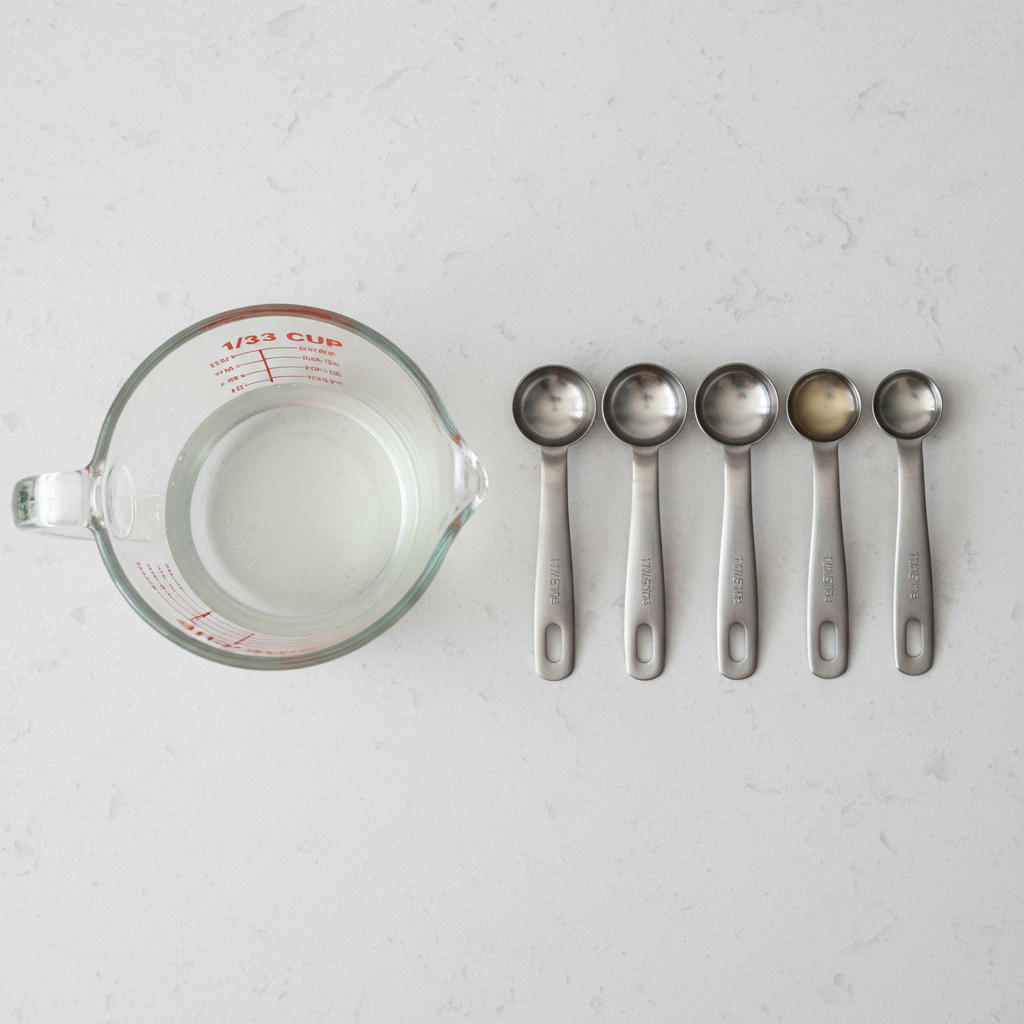
When you’re in the kitchen, especially when following recipes, understanding precise measurements is key to culinary success. One common point of confusion for many home cooks revolves around liquid and dry ingredient conversions, particularly when dealing with fractions of cups. Today, we’re going to demystify a very specific, yet frequently asked, question: how many tablespoons are in 1/3 cup?
The Simple Conversion: Tablespoons to Cups
The standard U.S. customary measurement system dictates a clear relationship between tablespoons and cups. There are 16 tablespoons in 1 cup. This fundamental fact is the bedrock upon which all other cup-to-tablespoon conversions are built.
To figure out how many tablespoons are in a fraction of a cup, we simply apply this ratio. Since 1 cup equals 16 tablespoons, then 1/3 of a cup is equal to 1/3 of 16 tablespoons.
Calculating this is straightforward:
(1/3) * 16 tablespoons = 16/3 tablespoons
When you divide 16 by 3, you get approximately 5.33 tablespoons.
So, there are 5 and 1/3 tablespoons in 1/3 cup.
Why This Matters in Your Kitchen
Understanding this conversion is incredibly useful. Many recipes, especially in baking, call for specific amounts of ingredients like sugar, flour, or liquids. If a recipe asks for 1/3 cup of a certain spice, and you only have measuring spoons readily available, knowing that this equates to roughly 5 and 1/3 tablespoons allows you to measure accurately.
This is particularly important for ingredients where precision impacts the outcome, such as in delicate pastry recipes or when creating specific flavour profiles. For instance, when adding vanilla extract, a key flavouring agent, even a slight over-measurement can alter the taste. Knowing the exact tablespoon equivalent helps maintain recipe integrity.
If you’re ever in doubt about other cup-to-tablespoon conversions, you might find this resource helpful: How Many Tablespoons in 1/4 Cup.
Measuring Tools and Accuracy
It’s worth noting that the accuracy of your measurements also depends on your tools. Using standard measuring cups and spoons is crucial. For dry ingredients, you’ll want to level off the excess with a straight edge, like the back of a knife. For liquids, ensure the measuring cup is on a flat surface and you’re reading the measurement at eye level.
Dry vs. Liquid Measurements
While the conversion from cups to tablespoons remains the same for both dry and liquid ingredients, the method of measuring can differ. Dry ingredients are often spooned into the measuring cup and levelled, whereas liquids are poured. This distinction is a core principle taught in culinary arts and is essential for consistent results.
Beyond 1/3 Cup: Other Common Conversions
Understanding the 1/3 cup conversion is just one piece of the puzzle. Here are a few other common equivalents that might come in handy:
- 1 cup = 16 tablespoons
- 1/2 cup = 8 tablespoons
- 1/4 cup = 4 tablespoons (You can learn more about this specific conversion here.)
- 1/8 cup = 2 tablespoons
These conversions are part of a larger system of measurement that has evolved over centuries. The history of measurement is a fascinating look at how humans have sought to quantify the world around them.
Conclusion
So, the next time a recipe calls for 1/3 cup of an ingredient, you’ll know precisely that it’s equivalent to 5 and 1/3 tablespoons. Mastering these fundamental kitchen conversions will not only save you time but also elevate your cooking and baking to new heights, ensuring your dishes turn out just as the recipe intended. Happy cooking!
